
Table of Contents
ToggleA smart home touch panel sits at the center of modern home automation, acting as the brain that ties together everything from lighting and climate control to security and entertainment. Unlike scattered apps on your phone or voice commands that sometimes mishear “lights” as “flights,” a dedicated wall-mounted panel gives you instant, unified control at a glance. Whether you’re planning a renovation or upgrading an existing setup, understanding how these panels work and what they can do will help you make an informed choice that fits your home and lifestyle.
Key Takeaways
- A smart home touch panel serves as a centralized control hub that consolidates multiple apps and devices into one intuitive wall-mounted interface, simplifying automation for all household members.
- When selecting a smart home touch panel, prioritize screen size (at least 7 inches), responsiveness (under 200 milliseconds), and compatibility with your existing ecosystems like Zigbee, WiFi, and Bluetooth protocols.
- Surface-mounted installation is DIY-friendly and requires only a nearby power source and network connectivity, while recessed options offer a cleaner aesthetic but involve more complex framing work.
- Secure your panel with strong passwords and two-factor authentication, and consider wired ethernet connectivity over WiFi for rock-solid performance and reduced lag.
- Modern touch panels improve daily convenience, accessibility for children and seniors, and home resale value while encouraging intentional energy management and remote device monitoring.
What Are Smart Home Touch Panels and Why They Matter
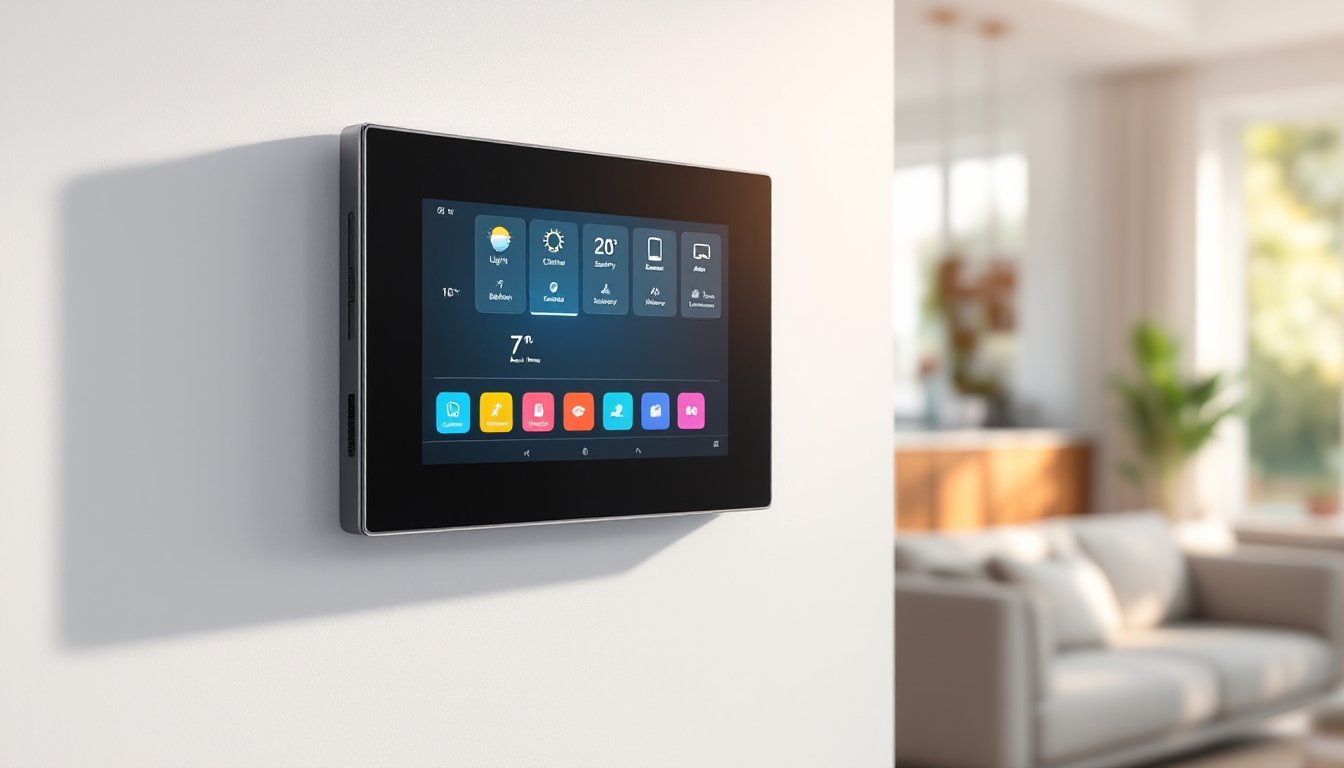
A smart home touch panel is a wall-mounted or standalone display that acts as a centralized control interface for your home’s connected devices. Think of it as the dashboard of your house. Instead of flipping light switches, adjusting thermostats manually, or fishing your phone out of your pocket to unlock the front door, everything runs from one intuitive screen.
These panels typically feature 7- to 15-inch touchscreens and run on Android, proprietary firmware, or cloud-based platforms. They’re hardwired to your home’s electrical system (just like a traditional light switch) and communicate with your smart devices via WiFi, Bluetooth, Zigbee, or Z-Wave protocols. The real value comes from consolidation, one hub instead of five apps, one interface instead of mixed controls.
For homeowners and DIY enthusiasts, touch panels solve a genuine problem. Visitors don’t need to download apps to adjust the thermostat. Family members don’t need to memorize voice commands. Renters living in apartments can, with proper setup, enjoy centralized control without major rewiring. When integrated thoughtfully, a quality touch panel becomes as essential as your kitchen counter, sitting right where you need it most.
How Smart Home Touch Panels Work
Smart home touch panels operate as communication hubs between your devices and the internet. Here’s the basic flow: you tap the screen, the panel sends a command via WiFi or another wireless protocol to your devices (smart lights, locks, thermostats), and they respond instantly.
Most modern panels run on Android or a Linux-based operating system and connect to your home network, either wired ethernet or WiFi. Wired is preferable for stability: WiFi works but introduces potential lag if your signal wavers. The panel acts as a local controller, meaning basic functions (turning lights on and off) happen without needing internet. That’s a safety feature, your lights won’t suddenly go dark if your broadband drops.
For cloud-connected features, checking your security cameras remotely, scheduling temperature adjustments from your office, the panel does need internet. The panel bridges local and cloud control, which is why reliable networking setup matters. Some panels integrate with hubs from major ecosystems (Amazon Alexa, Apple HomeKit, Google Home), while others manage proprietary networks. A few top-tier models function as standalone hubs themselves, eliminating the need for a separate brain. Understanding this architecture helps you evaluate whether a panel will truly work with your existing devices.
Key Features to Look For When Choosing a Panel
The best touch panel for your home balances screen size, responsiveness, ecosystem compatibility, and aesthetics. Look for a display with at least a 7-inch screen: anything smaller feels cramped when adjusting settings. Resolution and brightness matter, you want to read it from across the room and in daylight without squinting. A 1080p display is the modern minimum: anything less looks dated.
Responsiveness is crucial. Tap the screen and controls should react within 200 milliseconds. Sluggish panels feel cheap and frustrate users. Battery backup for critical functions (locks, security) is a nice-to-have but not mandatory, most homes have enough redundancy that a brief power loss isn’t catastrophic.
Customization and user profiles are overlooked but important. Can you set up quick-access buttons for common scenes (Bedtime, Away, Movie Mode)? Can you create different permissions for household members or guests? A panel that forces you to drill through menus every time becomes a paperweight.
Integration and Compatibility Considerations
Before buying, inventory your existing smart devices and their protocols. If you have Philips Hue lights (Zigbee), August locks (WiFi/Bluetooth), and an Ecobee thermostat (WiFi), your panel must support all three, or at least be compatible via a central hub. Mixing ecosystems is common: look for panels that play well with multiple standards rather than proprietary-only setups.
Future-proofing matters. Panels that support Matter, the new industry standard for smart home interoperability, have longer relevance. Check whether the manufacturer releases regular software updates. A panel abandoned after two years will feel very limited by 2028. Read user reviews specifically for long-term reliability and software maturity, early firmware versions sometimes have connectivity bugs that take months to iron out. During the planning phase, confirm your panel works with smart home devices you already own or plan to add.
Installation Options for DIY Enthusiasts
Touch panels come in two main installation flavors: surface-mounted and recessed. Surface-mounted panels attach directly to drywall or trim and are the DIY-friendly choice. Recessed panels sit flush in the wall cavity like a light switch and require cutting into studs or existing framing, more involved but cleaner aesthetically.
For a surface mount, you’ll need a power source nearby. If you’re replacing a light switch, you can usually repurpose the existing electrical box and wiring. Run a 2-wire circuit (with ground) at 12 or 24 volts, depending on your panel’s power requirements, check the spec sheet. Most modern panels use low-voltage systems for safety. Use appropriate wall anchors or drywall screws: don’t skimp here. The panel’s weight (typically 2–5 pounds) won’t cause drywall to fail, but a loose installation looks sloppy and can cause connection issues.
Network connectivity comes next. If your router is nearby, WiFi is convenient. For a panel in a remote corner (mudroom, garage), run a run an ethernet cable behind baseboards or through attic space to ensure rock-solid performance. Cat6 is the modern standard: Cat5e works but is aging. Avoid routing cables next to high-voltage lines: electromagnetic interference is real.
Configuration and pairing involve downloading the manufacturer’s app, adding your device to their cloud account, then pairing it with your smart devices one by one. This is tedious but straightforward, no special skills needed. Set aside 30–60 minutes. If you’re uncertain about electrical work, hire a licensed electrician for the hardwiring. Panels aren’t difficult to install, but faulty electrical work creates fire and shock hazards. Know your limits. Security setup is equally critical: use strong, unique passwords and enable two-factor authentication. A poorly secured panel is an open door to your home’s systems. Reference how to secure your smart home devices for best practices.
Real-World Benefits and Design Appeal
Installed correctly, a smart home touch panel transforms how you interact with your home daily. Imagine entering with groceries, and a single tap activates scenes that unlock the front door, turn on hallway lighting, and adjust the temperature to your preference. That’s not magic, it’s automation that respects your time.
For households with children, elderly family members, or renters, centralized control beats scattered apps. A 7-year-old doesn’t need to navigate iOS or Android: they can turn on bedroom lights from a familiar panel. Seniors appreciate the simplified interface compared to smartphone complexity. Renters enjoy smart home devices for apartments without installing hard-wired fixtures that landlords dislike.
Design-wise, modern panels complement contemporary interiors. Manufacturers offer finishes in matte black, white, brushed aluminum, and even wood-grain. Placement matters, install it near your entry, in the kitchen, or in a central living space, not tucked in a hallway no one uses. A well-positioned panel becomes a conversation piece, proof that your home is future-ready. Beyond aesthetics, panels improve home resale value. Buyers recognize integrated smart home systems as an upgrade, similar to updated appliances. Finally, energy management becomes visible and intentional. Dashboards that show your thermostat, lighting zones, and power consumption encourage conservation. Cloud-connected smart devices let you monitor performance remotely, catching problems like phantom power draw before they inflate your bills.
Conclusion
Smart home touch panels represent a practical step toward integrated living, not a luxury gadget, but a genuinely useful control center. They consolidate apps, simplify interfaces, and tie your devices into one responsive system. Whether you’re building new or retrofitting, focus on compatibility, responsiveness, and honest installation (hire pros if electrical work intimidates you). The panel you choose today will define your smart home experience for the next 5–10 years, so choose thoughtfully. Resources like digital trends smart home touch panels and Tom’s Guide smart home panels offer detailed side-by-sides to narrow your options. Start with a plan, measure twice, and enjoy the hands-on satisfaction of bringing your home into 2026.