
Table of Contents
ToggleCooked rice is a kitchen staple, quick to reheat, versatile, and perfect for meal prep. But leaving it on the counter or storing it carelessly can turn that convenience into a food safety issue. Knowing how long cooked rice lasts in the refrigerator, and how to store it properly, keeps your meals safe and helps reduce waste. This guide covers the critical storage timelines, warning signs of spoilage, and proven methods to extend shelf life so you can confidently use leftovers without worry.
Key Takeaways
- Cooked rice lasts 3 to 4 days in the refrigerator at 40°F or below, but rice left at room temperature for more than 2 hours should be discarded due to bacterial growth.
- Brown rice has a shorter shelf life (2–3 days) compared to white rice because oils in the bran promote rancidity, and rice mixed with proteins or fats spoils faster.
- Always cool hot rice on a shallow dish for 10–15 minutes, then transfer to airtight containers and refrigerate within 2 hours to prevent condensation and bacterial growth.
- Spoiled rice may not show visible signs, so rely on smell (sour or fermented odor), mold growth, and sliminess rather than appearance alone—when in doubt, throw it out.
- Freeze cooked rice in airtight containers or bags to extend storage to 4–6 months, and thaw overnight in the refrigerator or reheat directly from frozen for convenient meal prep.
Standard Refrigerator Storage Time for Cooked Rice
Cooked rice stored in the refrigerator at 40°F (4°C) or below stays safe to eat for 3 to 4 days. This timeline applies to most rice varieties, white, brown, jasmine, basmati, when stored in airtight containers.
The USDA’s food safety guidelines peg this window based on pathogen growth rates. After day four, bacteria like Bacillus cereus (the culprit behind rice-borne foodborne illness) can multiply to unsafe levels, even if the rice looks and smells normal. The catch: rice left at room temperature for more than 2 hours should be discarded, as bacteria thrive in the “danger zone” of 40°F to 140°F.
If you’re regularly cooking rice in bulk for the week, plan to eat or freeze portions by day three to play it safe. This simple habit prevents waste and keeps stomach troubles off the menu.
Factors That Affect How Long Rice Stays Fresh
Not all cooked rice lasts equally. Several variables shift the storage window or accelerate spoilage.
Temperature and Humidity Conditions
Refrigerator temperature is the primary control lever. A fridge set to 32–40°F is ideal: above 40°F, bacterial growth accelerates noticeably. If your refrigerator runs warm (check with a cheap thermometer), rice spoils faster, aim to get it back to proper temperature.
Humidity also plays a role. Excess moisture trapped in containers promotes mold and bacterial growth. Conversely, overly dry storage (like a freezer with frost buildup) can degrade texture over weeks, though the rice remains safe.
Rice Type and Preparation Method
White rice, stripped of its bran and germ during milling, lasts about 3–4 days refrigerated. Brown rice, with its intact bran, has a slightly shorter window, typically 2–3 days, because oils in the bran oxidize and promote rancidity. Jasmine and basmati varieties fall into the white-rice timeline.
Additions matter too. Rice cooked with butter, oil, or cream-based dishes may spoil faster due to fat oxidation. Plain, simply seasoned rice with salt and water stores longer than a loaded fried rice with eggs and meat. If you’ve mixed in perishables like cooked chicken or seafood, follow the shortest storage window of the add-ins (usually 3–4 days for cooked proteins).
Best Practices for Storing Cooked Rice at Home
Proper storage starts the moment rice finishes cooking.
Cool it quickly. Spread hot rice on a clean baking sheet or shallow dish for 10–15 minutes to shed steam. This cools it faster and prevents condensation inside the container, which breeds bacteria and mold.
Use airtight containers. Glass or plastic containers with tight-fitting lids are essential, they lock in moisture and block air exposure. Avoid leaving rice in the pot with a loose lid. Restaurants and meal-prep professionals use shallow, clear containers (like deli-style 2-quart boxes) so rice cools evenly and you can spot spoilage at a glance.
Refrigerate immediately after cooling. Once rice reaches room temperature (roughly 70°F), transfer it to the fridge within 2 hours total from cooking. Don’t let it linger on the counter.
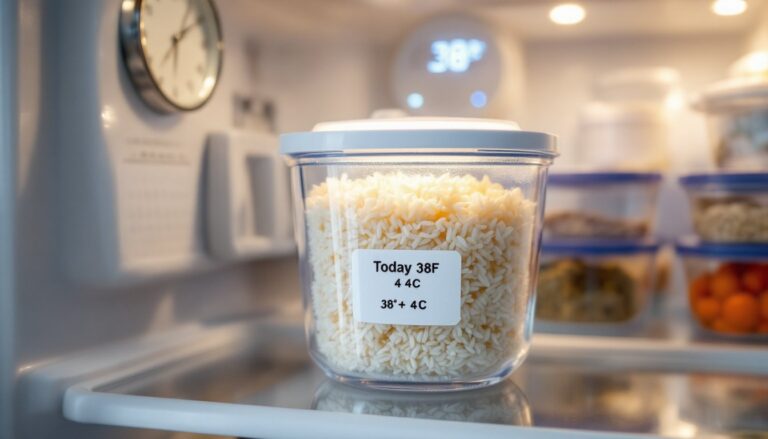
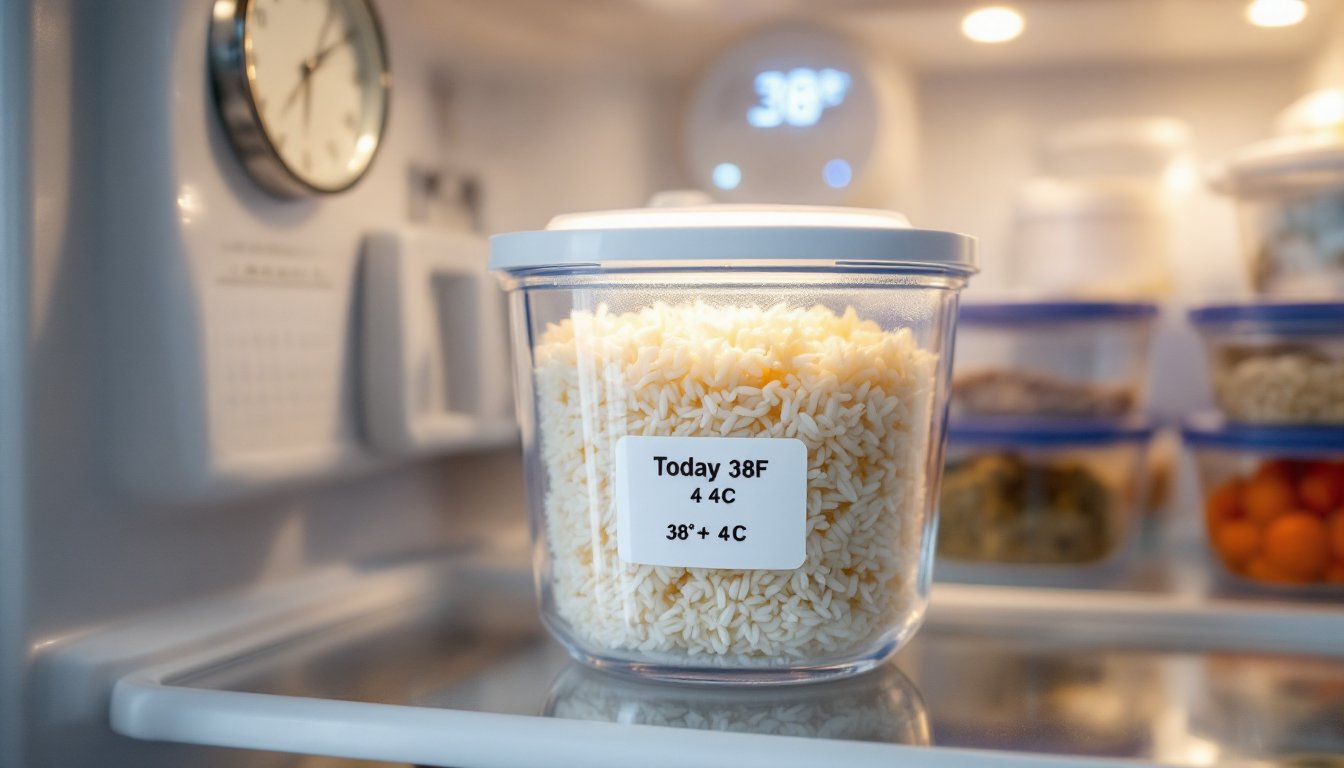
Label with the date. Use a marker or sticker to write the storage date on the container. It’s a one-second habit that prevents the “when did I make this?” guessing game.
Keep the fridge organized. Store rice on a dedicated shelf (often the middle or upper shelf) away from raw meat to prevent cross-contamination. This also helps ensure consistent, cold temperatures around the rice.
How to Tell if Your Cooked Rice Has Gone Bad
Spoiled rice isn’t always obvious. Smell, appearance, and texture are your senses to rely on.
Smell test. Fresh cooked rice has a mild, neutral grain aroma. If it smells sour, fermented, or off in any way, like vinegar or wet socks, toss it. This is often the first warning sign.
Visual inspection. Look for mold (fuzzy spots, usually white, green, or black), sliminess, or unusual discoloration. If the container has condensation or the rice appears wet beyond normal moisture, it’s past safe to eat.
Texture and taste. Fresh rice is separate and slightly fluffy or sticky depending on type. If it feels slimy, clumpy in an odd way, or tastes off, bitter, vinegary, or stale, don’t eat it. When in doubt, throw it out. Foodborne pathogens won’t always alert your senses, so a strict timeline is worth following.
Don’t rely on looks alone. Bacillus cereus and other bacteria grow without visible signs. Even rice that looks and smells fine could be unsafe on day five or six. The 3–4 day rule is conservative for good reason.
Extending Rice Shelf Life: Freezing and Other Methods
If you know you won’t eat the rice within 3–4 days, freeze it. Freezing halts bacterial growth and extends safe storage to 4–6 months.
To freeze cooked rice: Cool it as described above, portion it into airtight freezer bags or containers, label with the date, and freeze flat (freezer bags save space). Thaw overnight in the refrigerator or reheat directly from frozen on the stovetop or in the microwave.
Resources like The Kitchn offer tested methods for freezing grains and batch cooking tips that simplify weeknight meal prep. Planning freezer storage before you cook ensures you’re not caught with rice approaching its expiration date.
Oil-coating trick. Some cooks toss cooked rice with a light coat of neutral oil (vegetable or sesame oil) before refrigerating. The oil creates a light barrier that slows oxidation and drying, though it doesn’t extend the 3–4 day window, it’s mainly a texture preservation hack.
Separate if mixed. If you’ve already combined rice with proteins or vegetables, don’t freeze it long-term: the texture degrades faster and flavors muddy. Freeze plain rice, then add warm toppings or mix-ins after reheating for better results.