
Table of Contents
ToggleA large bathroom vanity transforms more than just counter space, it sets the tone for the entire room. For homeowners juggling crowded mornings and family routines, a properly sized vanity becomes the difference between chaos and calm. Whether you’re renovating a master bath or updating a guest space, a large bathroom vanity delivers practical storage, genuine style, and room to breathe. This guide walks you through what defines a large vanity, why one makes sense for your home, and how to choose the right fit without guessing or overspending.
Key Takeaways
- A large bathroom vanity ranges from 48 to 72 inches wide with 21–22 inches of depth, offering substantially more storage and functionality than standard 30–36 inch models.
- Large vanities provide dual-sink configurations, multiple drawers, and smart organization systems that eliminate counter clutter and accommodate household routines without compromise.
- Proper measurement and space planning, including door clearance and plumbing rough-in locations, prevent costly installation mistakes and ensure your large vanity fits seamlessly into your bathroom layout.
- Quartz countertops resist staining and moisture better than alternatives, while solid wood cabinetry with soft-close drawers withstands humid bathroom environments longer than particleboard options.
- A large bathroom vanity anchors your space with balanced proportions and design flexibility, instantly elevating the bathroom’s perceived luxury and value through intentional style and high-quality materials.
What Makes a Bathroom Vanity Large?
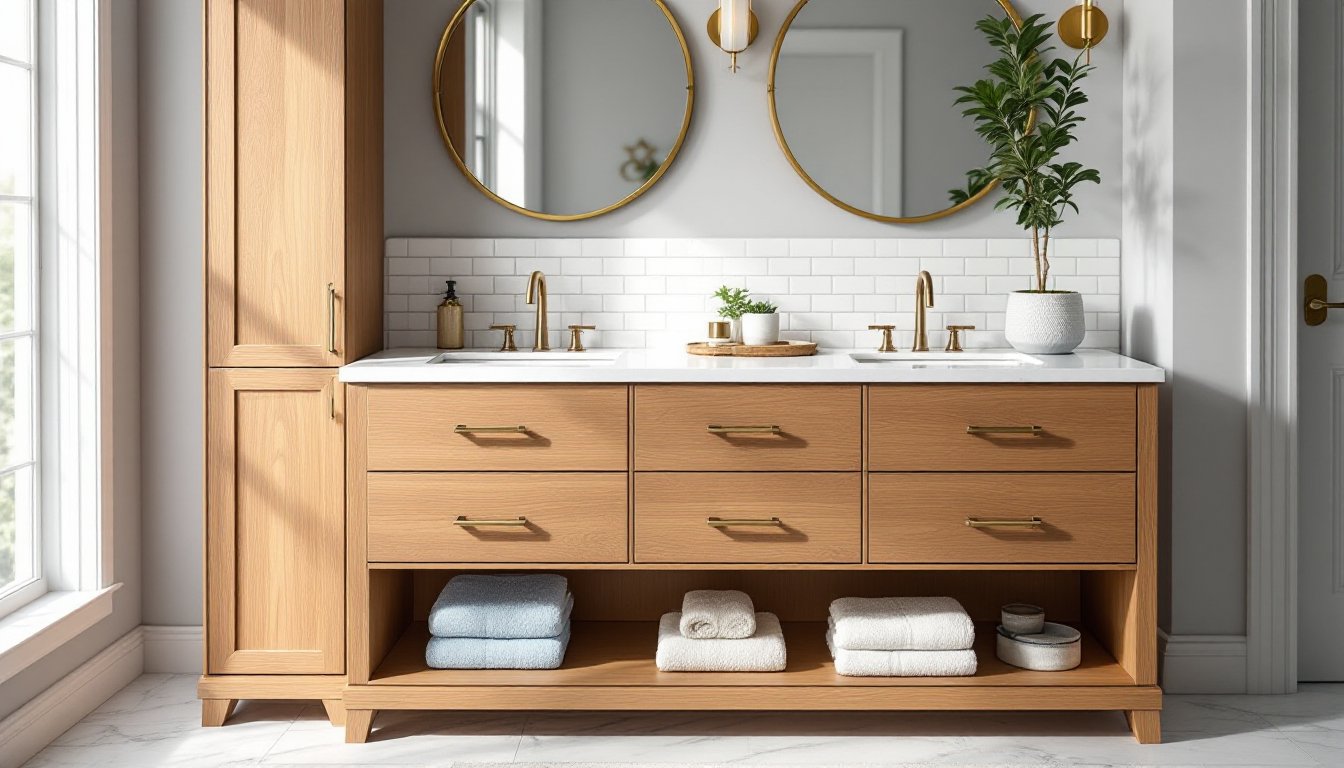
A large bathroom vanity typically measures 48 inches to 72 inches wide, substantially more than standard 30-inch or 36-inch models. The key isn’t just width: it’s the combination of width, depth, and usable storage underneath. Most large vanities sit at least 21 to 22 inches deep (actual depth, not nominal), allowing room for faucets, soap dispensers, and daily essentials without feeling cramped.
When shopping, distinguish between the cabinet’s outer dimensions and its usable interior space. A 60-inch vanity, for example, may house two sinks side-by-side, offer drawers plus open shelving, or feature one large basin with generous counter area. Countertop depth also matters, a 24-inch-deep top provides better support for accessories and reduces splashing than shallower options.
Height follows building code and ergonomic standards. Most vanities stand 32 to 36 inches tall (measured from floor to countertop), though some homeowners prefer 36 to 40 inches for better posture, especially in master baths. Confirm your bathroom’s layout, plumbing rough-in locations, and wall space before settling on a specific dimension.
Benefits of Installing a Large Vanity
Storage and Organization Solutions
The most immediate payoff of a large vanity is functional storage without visual clutter. Dual-sink configurations let household members share a space without stepping on each other’s toes. Multiple drawers, especially deep ones with dividers or pull-out organizers, tame cosmetics, medications, and grooming tools that would otherwise overflow onto counters.
Large vanities often include toe-kick shelving, interior vertical dividers, or built-in caddy systems that keep items accessible and contained. Consider a vanity with at least two substantial drawers plus open or closed cabinet space beneath the sink. This layout prevents the typical drawer-dump problem where everything slides into one chaotic mass. If your current setup requires baskets, bins, and hidden organizers just to function, a larger vanity with smart internal design eliminates that band-aid approach.
Upgraded vanities also accommodate under-sink storage for cleaning supplies, spare towels, and hair tools without forcing you to sacrifice counter space to a clutter battlefield.
Design and Aesthetic Appeal
A large vanity anchors the bathroom and sets a luxury feel instantly. Compared to cramped, dated 24-inch models, a substantial vanity reads as intentional and high-end, even on a modest budget. When proportions match your bathroom’s scale, the entire space feels balanced: a 48-inch vanity in a 5-by-8-foot bathroom looks right, while a 36-inch option looks undersized and dated.
Design choices expand dramatically with larger vanities. You can opt for natural wood finishes, painted cabinetry in trending colors, or sleek modern lines without sacrificing functionality. Countertop materials, quartz, marble, granite, or engineered stone, show better when they have room to breathe. Vessel sinks, integrated faucets, and statement hardware become focal-point elements rather than afterthoughts squeezed onto cramped surfaces.
Personality emerges through scale. Remodelista and similar design resources showcase how vanity selection directly influences whether a bathroom feels generic or curated. A large vanity with the right materials and style choice elevates the entire home’s perceived value.
Choosing the Right Large Vanity for Your Bathroom
Measuring and Space Planning
Before you shop, measure your bathroom with precision. Note the exact distance between walls where the vanity will sit, accounting for door swing, towel racks, and traffic flow. Many homeowners underestimate the impact of door clearance, a vanity that crowds the entryway creates daily frustration.
Locate your existing plumbing rough-ins (water supply and drain lines). A new vanity might reuse these locations, but moving them adds cost and complexity. Pre-drill wall holes, rough-in new plumbing, and confirm supply/drain locations before ordering, this prevents expensive last-minute adjustments. If your bathroom lacks adequate wall studs to anchor a large vanity securely, you’ll need to add blocking or reinforcement during installation.
Measure ceiling height, especially if you’re considering tall or towering vanities. Confirm electrical outlet locations to avoid conflicts with under-sink plumbing or cabinet layout. Sketch your bathroom layout to scale, marking the vanity footprint, door swing, and traffic path. This simple step catches 80% of fit problems before delivery day.
Standard tub and bathroom fixture dimensions vary slightly by region, but building codes typically require at least 30 inches of clear floor space in front of fixtures.
Style and Material Considerations
Countertop material shapes both durability and aesthetics. Quartz resists staining, scratches, and moisture exceptionally well, a smart choice for high-traffic bathrooms. Marble and granite deliver luxury but require sealing and careful maintenance. Engineered stone offers durability at moderate cost but limited color ranges. Budget at least $50 to $200 per linear foot for materials, installed, depending on grade and region.
Cabinet construction matters as much as appearance. Solid wood (maple, oak, or birch) withstands humidity better than particleboard or MDF, though it costs more. Vanities designed for wet environments feature moisture-resistant coatings, adjustable shelving, and ventilated base frames. Check that drawers use soft-close mechanisms, a feature that prevents slamming and extends hardware life in humid bathrooms.
Faucet style and sink type depend on countertop depth and personal preference. Widespread faucets need 8 to 12 inches of clearance between spout and backsplash. Undermount sinks blend seamlessly with stone tops but require professional installation and proper support. Vessel sinks sit atop countertops and offer design flexibility but demand taller faucets and careful height planning. Homedit showcases how vanity and faucet pairings influence the final look, modern vanities benefit from sleek chrome or matte black fixtures, while traditional cabinets pair well with brushed nickel or oil-rubbed bronze.
Finish color sets the room’s mood. Soft whites and grays remain timeless and work with any bathroom style. Painted navy or forest green vanities add character and trend appeal, just ensure the paint can handle bathroom humidity through proper primer and topcoat application.