
Table of Contents
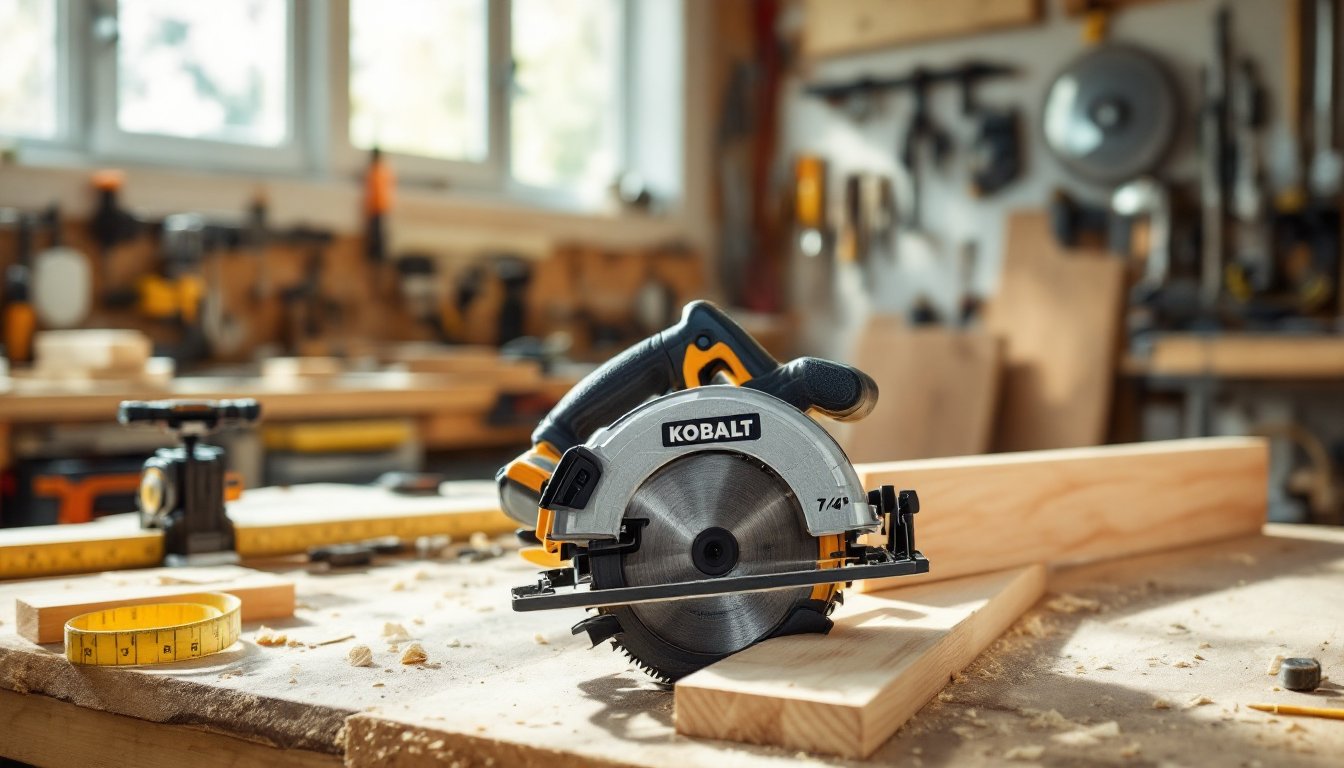
ToggleA quality circular saw is one of the first tools most DIYers grab for framing, deck building, or crosscutting lumber. If you’re shopping for one without very costly, a Kobalt circular saw deserves your attention. Kobalt has built a solid reputation for delivering solid mid-range tools that don’t sacrifice performance for affordability. This review walks through what sets Kobalt saws apart, the key specs you need to understand, and how to pick the right model for your projects. Whether you’re building a pergola, ripping boards, or making angled cuts, you’ll find practical guidance here.
Key Takeaways
- Kobalt circular saws offer a trusted mid-range balance between affordability and performance, with solid warranties and a shared battery ecosystem across multiple cordless tools.
- Most Kobalt circular saw models feature 13-amp motors and standard 7.25-inch blade capacity, making them ideal for crosscutting and ripping lumber in DIY framing and deck projects.
- Choosing between corded and cordless Kobalt models depends on project scope—corded provides consistent power for longer cuts, while cordless offers convenience for shorter jobs and portability outside the garage.
- Investing in quality replacement blades (40-60 tooth carbide for crosscutting) is more important than motor power for achieving clean cuts and preventing tearout with your Kobalt saw.
- Proper workspace setup, sharpening maintenance, and safety precautions like PPE and straightedge guides will maximize the lifespan and accuracy of your Kobalt circular saw for years of projects.
What Makes Kobalt Circular Saws Stand Out
Kobalt circular saws occupy a middle ground that appeals to serious DIYers and light-duty contractors. They’re not budget-basement imports, and they’re not pro-grade DeWalts or Makitas either. Instead, they balance feature set, durability, and price in a way that feels fair.
First, Kobalt stands behind its tools. Most corded Kobalt saws come with a three-year warranty, and their battery-powered models work with the same battery ecosystem used across their drill drivers, impact drivers, and other cordless tools. This means if you’re building up a Kobalt system, each new tool you add doesn’t require its own charger and battery set. When manufacturers like Kobalt recognize that homeowners buy multiple tools, the ecosystem approach saves real money and garage space.
Second, Kobalt saws feel solid in hand. The shoe (the metal plate that sits against your workpiece) is typically aluminum or stamped steel, both durable choices. Handles are usually rubberized or wrapped, which matters when you’re cutting for hours or working in damp conditions. The bevel adjustment, depth-of-cut knobs, and blade-access points are placed logically, not as an afterthought. According to independent reviews on tool brands, Kobalt consistently ranks as a trusted mid-range option for DIY buyers, particularly for oscillating tools and saws.
Third, blade change is quick. Most Kobalt models use a spindle-lock button rather than a wrench-and-pin combo, meaning you can swap blades without hunting for two wrenches. In a day of cutting, that small convenience adds up.
Key Features and Specifications to Know
Motor Power and Cutting Capacity
Kobalt’s corded circular saws typically run 13-amp motors, which deliver enough torque for crosscutting and ripping through standard lumber without bogging down. For perspective, 13 amps is the sweet spot for homeowner-grade saws: pro models often start at 15 amps. Maximum blade size is usually 7 1/4 inches, the industry standard for circular saws. This means the saw can cut through a 2×10 at 90 degrees, or a 2×6 at a 45-degree bevel.
Depth-of-cut specifications matter. Most Kobalt models max out around 2 5/8 inches at 90 degrees, and about 1 7/8 inches at a 45-degree bevel. If you’re building decks (which often use 2×10 or 2×12 joists), confirm the saw’s depth rating before buying. The shoe should tilt from 0 to 45 degrees for bevel cuts, which all major brands support.
RPM (revolutions per minute) on Kobalt corded saws runs between 5,500–6,000 RPM, which is standard. Higher RPM doesn’t always mean better cuts, blade selection and feed rate matter more. Cordless Kobalt models usually carry 18-volt or 20-volt batteries, though some newer compact versions use lower voltages. Battery models are lighter and quieter, but they’ll struggle with dense hardwoods or extended rip cuts: they’re best for shorter jobs or framing work.
Blade Options and Versatility
A circular saw is only as good as the blade you mount. Kobalt saws accept standard 7 1/4-inch blades, so you’re not locked into proprietary options. For rough framing, use a 24-tooth carbide blade (fast, tearout-prone). For crosscutting, a 40-tooth or 50-tooth carbide blade gives a cleaner edge with less splintering. Some DIYers keep a 6-tooth or 8-tooth ripping blade for fast, rough cuts and a 90-tooth or 100-tooth blade for finishing-grade plywood and trim work.
Kobalt’s bundle offerings often include a basic 24-tooth blade, but that’s a starting point. Budget an extra $15–$30 for a quality crosscutting blade if precision matters on your project. Home maintenance reviews and tool guides often recommend investing in decent blades because a dull or wrong-toothed blade will overheat, bind, and ruin your workpiece faster than a weak motor ever could.
Many newer Kobalt models include laser guides or LED work lights, which help with line-of-sight during a cut. Neither is essential, but both reduce measuring errors and missed marks. The laser is a dot or line that projects onto the workpiece ahead of the blade: it won’t be perfectly accurate in bright sun, but it’s useful in a garage or covered workspace.
How to Choose the Right Kobalt Model for Your Projects
Corded vs. Cordless is the first decision. If your projects are in a garage or you don’t mind a 50-foot extension cord, a corded saw eliminates battery-swap downtime and delivers consistent power. Cordless is worth considering if you’re doing shorter cuts, building outside far from outlets, or value the lack of a power cord wrapping around your legs.
Single-bevel vs. dual-bevel matters if you make lots of angled cuts. A single-bevel saw tilts one direction (usually left): a dual-bevel tilts both ways. Dual-bevel is more convenient for cutting rafters or fence pickets because you don’t flip the workpiece as often, but it costs $30–$60 more. For most DIY framing, single-bevel is fine.
Shoe type affects portability and accuracy. Cast aluminum shoes are heavy but hold a 45-degree angle reliably. Stamped-steel shoes are lighter and common on budget models: they’re fine, but the angle drift more easily if the saw takes a bump. If you’re building a permanent shop space, cast aluminum is worth the weight. If you’re hauling the saw between projects, stamped steel is acceptable.
Evaluate your actual projects. Are you mostly crosscutting 2x4s for framing? A basic 13-amp corded model with a 24-tooth blade will handle that all day. Will you rip hardwood flooring or cut thick plywood? Step up to a heftier motor (15 amps) or consider a dedicated table-saw for repeated rip cuts. Will you make bevel cuts on composite decking or metal flashing? Make sure the bevel range and depth of cut match your needs.
Visit your local Lowe’s or check retailer specs. Kobalt saws are sold primarily through Lowe’s, so availability and pricing vary by region and season. Reading verified customer reviews on the product page often surfaces real-world issues, blade wobble, shoe drift, or battery longevity, that spec sheets won’t mention.
Tips for Getting the Best Results and Safe Operation
Prep your workspace. Clamp or support your workpiece so it doesn’t shift mid-cut. A pinched blade will bind, jerk the saw, and risk throwing the workpiece or your hand. Understand the direction the blade rotates (upward through the workpiece) and position yourself so a bind won’t rotate the saw into you.
Wear appropriate PPE. Safety glasses (not just a squinted eye) protect against wood chips flying back. Hearing protection matters, circular saws run 85–90 decibels for hours. Work gloves keep splinters out, but keep loose sleeves and jewelry away from a spinning blade. A dust mask or respirator is essential if you’re ripping pressure-treated lumber or MDF, which create fine particles.
Let the blade reach full speed. Don’t plunge the blade into the workpiece as soon as you power on. Wait for the motor to spin up fully, then feed the saw smoothly forward. Forcing a blade that hasn’t reached speed overheats teeth and burns the wood.
Use a straightedge for long cuts. A chalk line, laser level, or clamped 2×4 ensures your cut stays perpendicular or follows the intended angle. Freehand rips almost always wander, especially on longer boards. If you’re ripping many pieces to the same width, a table saw or a circular saw with a rip guide attachment is faster and more accurate.
Maintain the blade and motor. Keep the blade sharp, dull blades overheat and produce tearout. Clean sawdust from the motor vents every few hours if you’re cutting a lot: dried dust acts as insulation and can cause the motor to overheat. Check the blade for wobble or damage: a bent blade isn’t worth the risk, even if it seems to work.
Respect electrical safety on corded models. Use a three-prong grounded cord or a GFCI outlet, especially in damp garages or outdoors. A wet workpiece and wet hands are an invitation for electric shock. If you’re uncomfortable with basic electrical safety, ask a friend or hire the job out. Serious injuries aren’t worth saving a few hours.
Conclusion
A Kobalt circular saw delivers solid performance without premium pricing. It’s a tool that won’t quit after a season of weekend projects and won’t require a second mortgage to buy. Choose a corded model for power and longevity, pick a cordless model for convenience, and match the specs to your actual projects, not your imagined future projects. Pair your saw with quality blades, respect safety basics, and you’ll complete years of framing, crosscutting, and angled cuts with confidence.