
Table of Contents
ToggleMost homeowners assume starting a dishwasher is straightforward, fill it, add detergent, press a button. But there’s more to it than that if you want clean dishes and a machine that lasts. Different models have different control panels, cycle options, and quirks. Whether you’ve just moved into a place with an unfamiliar unit or you’re helping a family member get the hang of theirs, understanding how to properly start a dishwasher saves time, water, and frustration. This guide walks you through everything: reading your control panel, preparing your load, selecting the right cycle, and fixing common problems that prevent a successful start.
Key Takeaways
- Understanding your dishwasher’s control panel—including the start button, cycle selector, and detergent dispenser—is essential to successfully start a dishwasher and achieve clean dishes.
- Proper preparation, such as rinsing soiled dishes, loading plates upright on the lower rack, and placing cups tilted downward on the upper rack, directly impacts cleaning effectiveness.
- Select the appropriate wash cycle for your load: Normal for everyday dishes, Heavy for grimy cookware, Quick for lightly soiled items, and Eco Mode to save 25% energy on regular loads.
- Use the correct detergent amount (1–2 tablespoons or one pod) placed in the main compartment, and close the dispenser firmly so the mechanism releases detergent at the proper time.
- If your dishwasher won’t start, check the door latch, verify power and child lock settings, ensure the inlet hose isn’t kinked, and reset the control panel by unplugging for 5 minutes if needed.
- Modern features like Sanitize Option, Heated Dry, and soil sensors can enhance results but add time and energy use, so select them only when necessary for your specific load.
Understanding Your Dishwasher’s Control Panel
Locating Essential Buttons and Dials
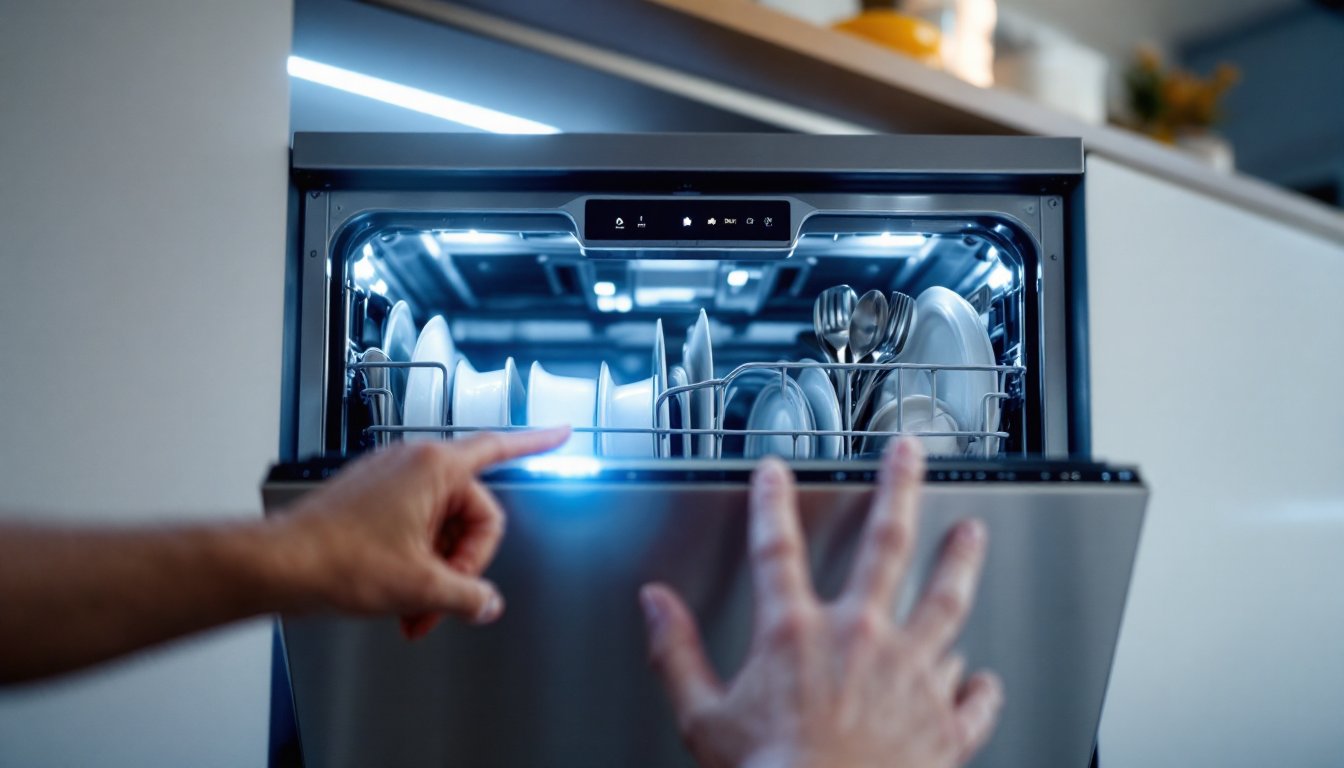
Your dishwasher’s control panel is the brain of the operation, and it varies widely depending on the model and age of the unit. Older machines may have a simple dial: newer ones often feature digital displays, touch controls, or a combination. The most important button is the start button, usually labeled “Start,” “Wash,” or simply marked with a play symbol (►). On many modern dishwashers, you’ll also find a lock feature that prevents accidental starts mid-cycle.
Next to the start button, look for the cycle selector. This knob or touchpad lets you choose wash intensity (Normal, Heavy, Delicate, etc.). Some units have separate buttons for options like “Heated Dry,” “Sanitize,” or “Eco Mode.” The detergent dispenser is usually located on the inside of the door and may have a separate pre-wash compartment. Familiarize yourself with how yours opens, some slide out, others flip, and a few have spring-loaded covers.
If your dishwasher is a newer model with a digital display, check for a delay start button or setting. This feature lets you schedule the wash for later, handy if you want to run it during off-peak hours or overnight. Some units also have a control lock feature, often activated by holding a button for 3–5 seconds, which prevents kids or pets from accidentally stopping or restarting a cycle.
Pre-Start Steps: Preparing Your Dishwasher
Loading and Detergent Setup
Before you even think about pressing start, the preparation phase makes or breaks the results. First, rinse heavily soiled dishes. Modern dishwashers don’t require a full pre-wash, but dried-on food, grease, or sauce should be loosened under running water. Skip scrubbing, a quick rinse is enough.
Loading matters more than many people realize. Place plates in the lower rack standing upright at a slight angle: avoid stacking them flat, which blocks water spray. Cups and bowls go in the upper rack, tilted downward so water drains out rather than pooling. Long utensils like spatulas and wooden spoons belong in the lower rack or utensil basket: never place knife blades pointing up, as they’re a hazard when you reach in. Avoid loading glasses or delicate items directly above something hard below, water pressure can cause them to crack. Proper loading ensures consistent spray coverage: crowded or haphazardly arranged dishes trap food particles and lead to poor cleaning. Incorrect loading is one
For detergent, use the correct amount, usually one to two tablespoons for powder or one pod for tablets, depending on water hardness and load size. Check your manual: many regions with soft water can use less. Pour liquid or powder into the main detergent compartment (the larger one inside the door). If your dispenser has a pre-wash compartment (a smaller, separate chamber), add a small amount of detergent there only if you’re running a heavily soiled load. Pods go directly into the bottom of the tub, never in the dispenser. Close the dispenser door firmly, it must latch for the mechanism to release detergent at the right time during the cycle.
Starting Your Dishwasher: Step-by-Step Instructions
Selecting Wash Cycles and Options
Once your dishes are loaded and detergent is in place, you’re ready to select a cycle. Most dishwashers have four or five standard options:
- Normal Cycle: The go-to for everyday loads: runs 2–3 hours at moderate water temperature. Best for regular dishes and cookware.
- Heavy/Pots & Pans Cycle: Hotter water, longer duration, and more powerful spray. Use this for grimy bakeware, cast iron (if your machine permits), or dishes with baked-on food.
- Delicate Cycle: Lower heat and gentler spray for glassware, fine china, or hand-painted ceramics. Runs 1.5–2 hours.
- Quick/Express Cycle: 30–45 minute wash for lightly soiled dishes when you’re in a hurry. Not recommended for heavily soiled loads.
- Eco/Energy-Saving Mode: Lower water temperature and reduced cycle time: uses about 25% less energy than a normal cycle. Works well for regular loads.
If your unit has optional features, consider your load:
- Sanitize Option: Boosts water temperature to kill 99.9% of germs: useful after illness or when washing baby bottles. Adds 15–30 minutes to the cycle.
- Heated Dry: Adds a heated drying phase at the end. Improves drying results but uses more energy: excellent for humid climates or loads with lots of plastics.
- Soil Sensors: Available on premium models, these detect how dirty the load is and adjust water use and cycle time automatically.
Select your cycle using the dial, button panel, or touchscreen. On digital units, you may see the estimated time and water usage displayed. Once you’ve made your selection, press the start button firmly and hold it for 1–2 seconds, many modern machines require a deliberate press to prevent accidental starts. You should hear a beep or see lights activate, indicating the cycle is beginning. The door will lock automatically once the cycle starts, and you’ll see or hear water entering the tub. Some machines display a countdown timer: others show only the cycle number or a light indicating operation.
Troubleshooting Common Start Issues
If your dishwasher won’t start after you’ve followed all the steps, don’t panic, most issues are simple fixes.
The door isn’t closing properly. Check that no dishes are blocking the latch, and ensure the door is fully pushed shut with a firm click. Some models require the door to be closed for 2–3 seconds before the start button activates. If the door seems stuck, inspect the hinges and seals for debris or damage.
You pressed start but nothing happened. First, verify the unit has power, check the breaker and outlet. Many dishwashers have a child lock feature that disables controls: if enabled, you’ll need to deactivate it by holding a button (usually marked “Control Lock” or “Child Lock”) for 3–5 seconds. Consult your manual for the exact button combination, as it varies by model. If the display is dark, the machine may be in standby mode: pressing start should wake it. If it still doesn’t respond after 30 seconds, unplug the unit for 5 minutes, plug it back in, and try again.
Water isn’t entering the tub. This usually means the fill valve is stuck or the inlet hose is kinked. Turn off the water supply to the dishwasher (shutoff valve under the sink), check that the inlet hose isn’t bent or pinched, and turn the water back on. If water still doesn’t flow, the fill valve may need replacement, a job for a professional unless you’re experienced with appliance repairs.
The detergent dispenser didn’t open mid-cycle. This typically means detergent has built up inside from improper loading or using too much powder. Run an empty cycle with white vinegar in the dispenser to clean it out. Ensure you’re using the correct detergent type and amount for your unit and water hardness.
The control panel is unresponsive. If buttons or touchscreen aren’t registering, the panel may need a reset. Unplug the dishwasher for 5 minutes, plug it back in, and test again. If the issue persists, the control board may be faulty and require professional service. For touchscreen models, wipe the surface dry, moisture or soap residue can interfere with touch sensitivity.
When in doubt, consult your owner’s manual, it contains model-specific troubleshooting steps and warranty information. If you’ve ruled out simple fixes like power and child lock, and the machine still won’t start, contact the manufacturer’s customer service or a qualified appliance repair technician. Kitchen appliance experts at Most appliance issues resolve in minutes once you know the right steps.