
Table of Contents
ToggleHard water is one of those silent home problems that compounds quietly, spotty dishes, grimy shower doors, and soap that won’t lather properly are the everyday annoyances, but the real damage happens inside your pipes and appliances. If you’ve noticed buildup on your faucet aerators or felt waxy residue in your hair after shampooing, you’re dealing with hard water minerals. A water softener system can solve this, but before you shell out money for one, it’s worth understanding what it actually does and how it works. This guide walks you through the mechanics in plain language, so you can make an informed choice about whether your home needs one.
Key Takeaways
- A water softener works by using ion exchange to swap calcium and magnesium minerals for sodium ions, eliminating hard water buildup in pipes and appliances.
- Hard water above 60 ppm (parts per million) causes scale buildup that reduces water flow, increases energy bills, and shortens the lifespan of water heaters and appliances by 2–3 years.
- Regeneration cycles clean the resin beads by flushing them with salty brine solution, typically occurring every 3–7 days and requiring monthly salt refills for maintenance.
- Soft water reduces soap and detergent consumption, prevents spotty dishes and mineral deposits on fixtures, and helps clothes feel softer and last longer.
- Installing a water softener can pay for itself within 5–10 years through lower energy bills and extended appliance life, making it a smart long-term investment for hard-water areas.
Understanding Hard Water and Why It Matters
Hard water contains dissolved minerals, primarily calcium and magnesium, that accumulate in your plumbing, water heater, and appliances. These minerals don’t harm your health, but they wreak havoc on your home’s systems and your wallet. Calcium and magnesium build up as scale inside pipes, reducing water flow and forcing your water heater to work harder to heat the same amount of water, which drives up energy bills.
Water hardness is measured in parts per million (ppm) or grains per gallon (gpg). Anything above 60 ppm or 3.5 gpg is considered hard water. If your water is noticeably hard, you’ll see soap scum on tub surrounds, white crusty deposits on faucet screens, and stiff laundry that doesn’t feel right even after washing. Over time, that scale buildup shortens appliance life, your dishwasher, washing machine, and water heater all fail sooner in hard water areas.
Most water hardness comes from geological sources. If you live in regions with limestone, chalk, or gypsum deposits, your groundwater naturally picks up these minerals. Public water utilities sometimes soften water before delivery, but many homeowners still need additional treatment for truly soft water.
The Ion Exchange Process: The Heart of Water Softening
The ion exchange process is how nearly all residential water softeners work. It’s not complicated, the system swaps hard minerals for soft ones using a chemical attraction.
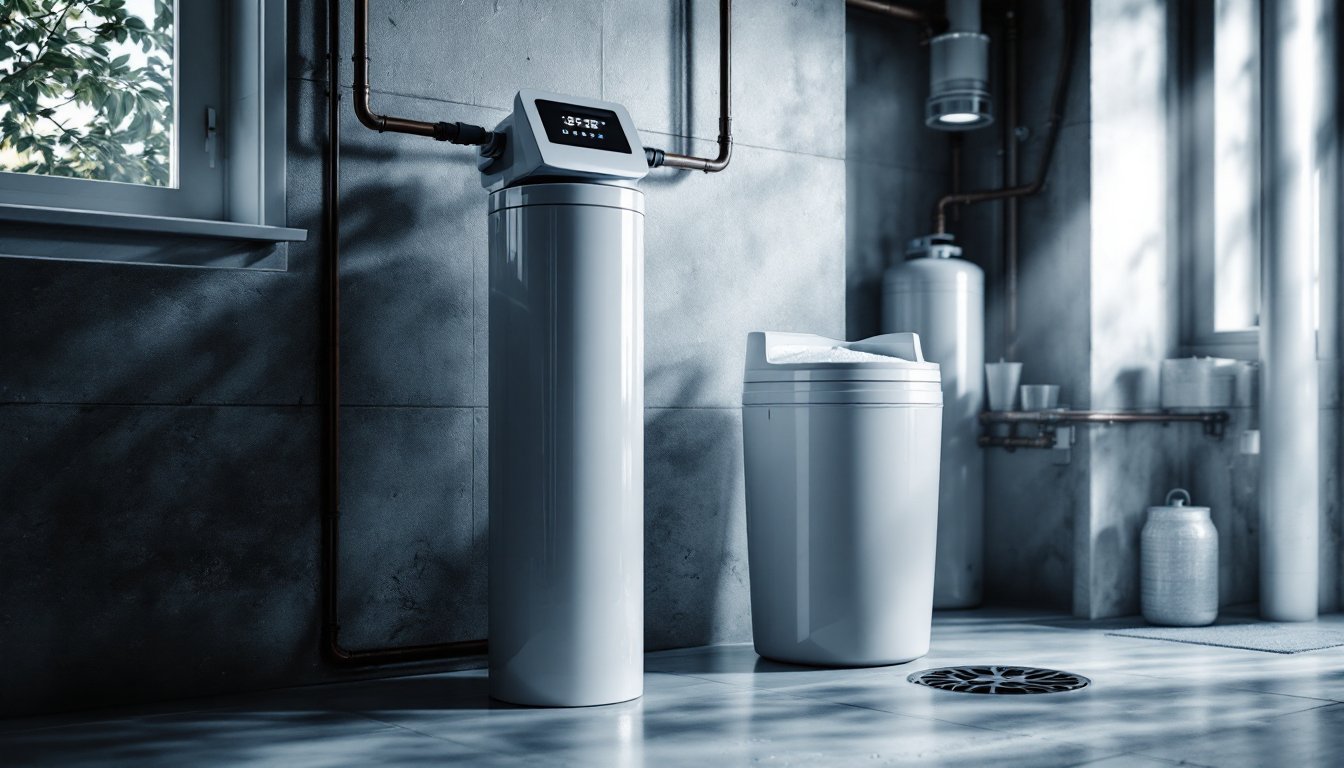
Inside the softener tank sits a bed of tiny resin beads (usually made of polystyrene), coated with sodium ions. When hard water passes through, calcium and magnesium ions are attracted to these beads and stick to them, while sodium ions are released into the water in their place. Sodium doesn’t form scale, so the water leaving the tank feels and acts like soft water.
The resin beads can only hold so many calcium and magnesium ions before they’re saturated and stop softening. That’s when regeneration happens, a cycle where salty brine solution (made from salt tablets or salt pellets you add to the softener’s brine tank) floods through the resin bed, stripping off the trapped hard minerals and recoating the beads with fresh sodium ions. The used-up minerals and excess salt drain away, and the system is ready to soften again.
How Resin Beads Trap Hardness Minerals
Resin beads are engineered to attract hardness minerals preferentially over other ions. Each bead has millions of binding sites, and they work at a molecular level, calcium and magnesium ions latch onto the resin surface while sodium passes through. This selectivity is what makes ion exchange so effective. A standard water softener resin can handle roughly 20,000 to 30,000 grains of hardness capacity (a technical measure of how much mineral load the resin can remove) before regeneration becomes necessary. For a household using 70–80 gallons per person daily, a mid-sized softener might regenerate every 3–7 days, depending on your water’s hardness level.
Types of Water Softeners and Their Mechanisms
Most homeowners encounter three main types of residential water softeners, each with different automation and cost profiles.
Tank-style (ion exchange) softeners are the most common and what we’ve described above. They’re reliable, cost-effective over time, and handle hard water of varying degrees well. A typical unit sits in a basement or utility closet and requires monthly salt refills. They regenerate automatically on a timer or when the resin reaches capacity (demand-initiated regeneration is more water- and salt-efficient).
Salt-free softeners don’t remove hardness minerals, instead, they condition the water so minerals don’t form scale. These systems use catalysts or template-assisted crystallization to transform calcium and magnesium into crystal structures that won’t adhere to pipes. They’re low-maintenance but don’t produce the same soft-water feel as ion exchange, and they’re less effective in very hard water areas. If you want the soap-lathering, silky feeling of truly soft water, skip salt-free systems.
Dual-tank softeners have two resin tanks so one can regenerate while the other continues softening, useful in large households where water demand is high. They cost more upfront but ensure you never run out of soft water during a regeneration cycle.
Ion exchange softeners remain the gold standard for home use because they actually remove hardness and provide noticeable quality-of-life improvements. The process explained by water softener experts confirms that ion exchange is the most effective method for residential applications.
Regeneration and Maintenance: Keeping Your System Running
Regeneration is essential maintenance. When you notice your softener isn’t producing soft water anymore, dishes have spots, soap won’t lather, regeneration is overdue.
Most modern softeners have automatic regeneration triggered either by a timer (every 3–5 days) or by demand (when the resin has softened a preset amount of water). Demand-based regeneration is more efficient because it only runs when necessary, saving salt and water. During regeneration, the system draws brine from the brine tank, backwashes it through the resin bed to release trapped minerals, and drains the waste water to a floor drain or septic system. The whole cycle takes 30 minutes to an hour, and you can’t use water while it’s running (though most cycles happen at night).
Salt maintenance is straightforward. You’ll add 50- or 80-pound salt bags every month or two, depending on water hardness and household size. There are two main types: rock salt (cheapest but leaves sediment), solar salt (cleaner, moderate cost), and pellet salt (purest, highest cost). Pellet salt is worth the extra cost for better performance and less tank cleaning over time.
Check the brine tank monthly. It shouldn’t be completely full of salt, water needs space to dissolve it. If salt bridges (forms a hard shell), break it up with a stick or call a service tech. Periodically, every 2–3 years, your resin bed may need cleaning with a specialized resin cleaner if you have iron-rich well water or high sediment. These are simple steps that keep the system running smoothly and avoid premature resin degradation.
Benefits of Water Softening for Your Home
The payoff of installing a water softener extends beyond comfort. Soft water reduces strain on appliances, your water heater won’t have to work against scale buildup, so it stays efficient longer and uses less energy. That means lower utility bills over time, often offsetting the softener’s cost within 5–10 years.
Soap and detergents work better in soft water. You’ll use less shampoo, laundry detergent, and dish soap because they lather and clean more effectively without minerals interfering. Clothes feel softer and last longer: dishes dry spotless. Bathroom fixtures and chrome stay cleaner without the cloudy mineral deposits.
Plumbing and appliances last longer. Scale buildup inside pipes narrows them and weakens them. Water heaters, dishwashers, and washing machines fail faster in hard water. Softening protects your investment. A water heater might last 8–10 years in soft water versus 5–7 years in hard water, that’s a $500–$1000 difference in replacement costs.
If you have a well, soft water is even more valuable because well water often has higher mineral content. Homeowners with wells benefit significantly from softening, and public water users in hard-water regions see similar improvements. Health-wise, softened water is safe to drink (the small sodium increase is negligible for most people, though those on strict sodium-restricted diets may want to soften only hot water lines and keep a cold-water bypass for cooking and drinking).
If you’re unsure whether you have hard water, request a free test from a local water softener dealer or grab an inexpensive water hardness test kit from a home center. Understanding your water’s mineral content helps you decide if softening is worthwhile for your household.
Conclusion
Water softeners work by swapping hardness minerals for sodium using ion exchange, a straightforward, proven chemistry that’s been used in homes for decades. If you live in a hard-water area, installing one of these systems protects your plumbing, extends appliance life, and improves daily comfort. The ongoing maintenance is minimal: add salt every month or two, and let the automation handle regeneration. It’s a smart investment that pays dividends in efficiency and home preservation.