
Table of Contents
ToggleUpper cabinets have long dominated kitchen design, but a growing number of homeowners are choosing open shelving instead, and for good reason. A kitchen without upper cabinets feels more spacious, allows natural light to flow freely, and creates a cleaner, more contemporary aesthetic. This approach works especially well in smaller kitchens where overhead storage can feel claustrophobic, or in modern homes where minimalism reigns. That said, ditching upper cabinetry requires thoughtful planning: you’ll need functional storage alternatives, a willingness to keep frequently used items display-ready, and shelving installed securely to support daily kitchen demands. If you’re considering this shift, understanding both the benefits and the practical realities will help you design a kitchen that looks great and works hard.
Key Takeaways
- A kitchen with no upper cabinets feels more spacious and bright by allowing natural light to flow freely and unobstructing sightlines to walls and windows.
- Open shelving costs significantly less to install than built-in cabinetry, often running half the price of custom upper cabinets, freeing up budget for countertops and appliances.
- A kitchen without upper cabinets requires disciplined organization, regular cleaning routines, and display-ready items—making it best suited for homeowners committed to intentional styling and maintenance.
- Combine open shelves with adequate lower base cabinetry, a dedicated pantry, and smart countertop organization to ensure functional storage without relying on overhead cabinets.
- Installation success depends on anchoring shelves securely to wall studs, using proper fasteners, and keeping shelves no more than 75% full to maintain both safety and visual appeal.
- Test the open shelving concept with a modest approach—two or three shelves in a limited area—before committing to a full kitchen redesign to ensure it matches your lifestyle and habits.
Why Homeowners Are Ditching Upper Cabinets
The shift away from upper cabinets stems from several converging trends. Homeowners want kitchens that feel open and airy, upper cabinets can make a space feel boxy and heavy, especially in homes with standard 8- or 9-foot ceilings. There’s also a desire for a more lived-in, less “designed” aesthetic: visible dishes and glassware have become decor rather than something to hide away.
Practically speaking, open shelving is far less expensive to install than built-in cabinetry. A single run of custom cabinets can cost $3,000–$5,000 or more, while quality shelving and brackets often come in at half that. If you’re renovating on a budget, eliminating overhead cabinets frees up money for countertops, appliances, or backsplash upgrades.
There’s also the flexibility factor. Open shelves are easier to reconfigure or remove than built-in cabinets. If your needs change or you decide the look isn’t working, you can adjust shelf height, add additional shelves, or switch to a different style, no contractor required for minor tweaks.
But, this approach isn’t for everyone. It demands more discipline in keeping everyday items tidy and dust-free, and it won’t work if you need to store large quantities of small appliances or bulk pantry items.
Design Benefits of Open Kitchen Shelving
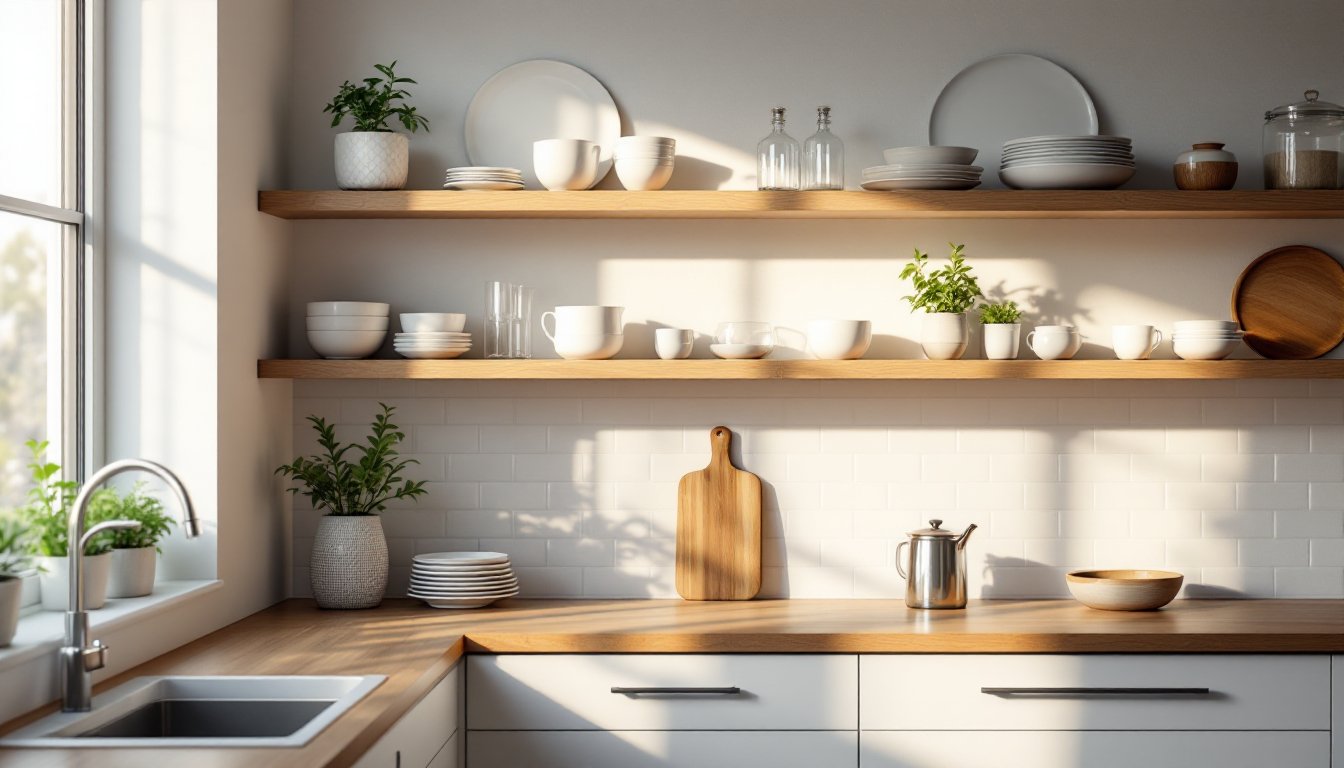
Open shelving transforms a kitchen’s visual impact in ways traditional cabinetry simply can’t. The absence of upper cabinets immediately expands the sense of space: your eye travels unobstructed to the wall or window beyond, making even a galley-style kitchen feel less cramped.
Natural light becomes a design asset. Cabinets typically block windows or require under-cabinet lighting to compensate: open shelves let sunlight bounce across your countertops and walls, naturally brightening the space. This is especially valuable in kitchens with north-facing windows or limited natural light sources.
You also gain flexibility with wall finishes and decoration. A beautiful tile backsplash, painted accent wall, or open brick becomes a design feature rather than something tucked behind cabinet doors. Many homeowners use this opportunity to introduce color, texture, or interesting materials that reflect their personal style.
Style Considerations and Kitchen Aesthetics
Design cohesion matters when nothing’s hidden. In a traditional or farmhouse kitchen, open shelving might display vintage pottery, cookbooks, and glassware in curated arrangements. Modern kitchens pair open shelves with stainless steel brackets and minimalist dishware. Scandinavian or Japanese-inspired kitchens use open shelving to showcase functional simplicity, fewer items, carefully selected, with generous negative space.
Color coordination becomes important. If your dishes are a coordinated set, white ceramic, natural wood tones, or earthy glazes, they’ll look intentional on display. Mismatched or bright-colored items can appear chaotic. Think of your open shelves the way a designer might style a bookshelf: grouping similar items, leaving breathing room, and occasionally introducing a decorative object (a wooden bowl, a plant, a framed print) to break up repetition.
Your backsplash, paint color, and countertop material should complement your shelving and the items displayed. A subway tile backsplash pairs well with farmhouse or transitional kitchens, while a dramatic slate or concrete backsplash suits modern minimalism. Plan these elements together, not as afterthoughts.
Practical Storage Solutions Without Upper Cabinets
Without upper cabinetry, you must rethink where everyday items live. The primary solution is a combination of lower base cabinets, open shelves, a tall pantry, and thoughtful countertop organization.
Lower cabinetry remains essential. Standard base cabinet runs (typically 24 inches deep, 34–36 inches tall) provide concealed storage for pots, pans, dishes, and less-attractive items. Drawers with dividers keep utensils and gadgets organized: pull-out baskets maximize corner cabinet space. Plan for at least 8–12 linear feet of base cabinetry in most kitchens.
Open shelves work best for items you use regularly and want accessible: everyday dishes, glassware, frequently used cookbooks, or a small collection of serving pieces. Shelves typically hold 25–40 pounds per linear foot (depending on bracket quality and stud spacing), so don’t overload them. Plan for shelf depth, 10 to 12 inches is standard for dishes and cookware.
A dedicated pantry (either a separate closet or an integrated cabinet unit) stores bulk items, appliances, and anything that looks better hidden. Walk-in pantries are ideal, but even a 24-inch-wide by 24-inch-deep base cabinet with tall shelving above (or beside) addresses overflow. Shelf dividers, labeled containers, and a logical category system keep things findable.
Countertop real estate gains importance. Resist the urge to crowd it with small appliances or utensil holders: instead, style it with a few key items: a canister set, a utensil crock, a wooden cutting board propped upright, or a potted herb. This restraint keeps the space feeling open rather than cluttered.
Many homeowners also invest in beautiful drawer organizers and door-mounted storage to maximize base cabinet efficiency. Wire shelf dividers, drawer inserts, and pull-out organizers make lower storage work harder without any visual impact.
Open Shelving Ideas and Installation Tips
Open shelves come in several styles, each with different visual and functional tradeoffs.
Wood shelving offers warmth and versatility. Solid wood (walnut, oak, pine) or plywood with a veneer finish can span 24–36 inches between supports. Thicker shelves (1.5 inches nominal) look more finished than thin stock and sag less over time. Stain or paint them to match your kitchen palette. Wood is forgiving to install and easy to modify, making it ideal for DIYers.
Steel or metal shelving suits industrial, modern, or transitional kitchens. Powder-coated steel brackets paired with wood shelves create a hybrid look: floating shelves with concealed metal frames deliver minimalism. Metal is durable but can feel cold without the right styling.
Glass shelves maximize visual lightness and work in contemporary spaces, though they require frequent cleaning and heavier-duty brackets. They’re best used sparingly (one or two shelves) rather than across an entire wall.
Installation essentials:
Locate studs in your wall using a stud finder: mark them on both sides of the wall with masking tape. Shelves must be anchored to studs (or use heavy-duty toggle bolts for drywall-only mounting, though studs are always preferable). Space studs are typically 16 inches apart: use this spacing to plan bracket placement.
Use a level to mark mounting holes. Even a quarter-inch off makes shelves appear tilted. Drill pilot holes to prevent the wall from cracking, then drive fasteners (lag bolts or wood screws into studs). For drywall anchors, follow the manufacturer’s weight rating carefully, don’t exceed it.
Consider shelf depth in relation to your wall space. A 10-inch-deep shelf leaves 4 inches of backsplash visible: a 12-inch shelf is standard but may visually crowd a narrow kitchen. Test the arrangement with cardboard shelf templates before drilling final holes.
Wear safety glasses when drilling overhead, and use appropriate fasteners. A single poorly installed shelf bracket can fail catastrophically when loaded with dishes, so don’t skimp on hardware or install instructions.
Keeping Open Shelves Organized and Clean
The biggest challenge with open shelving is maintenance. Dust settles more readily on open shelves than in cabinets, and a cluttered or disorganized shelf becomes an eyesore fast.
Organization strategies:
Group similar items together: drinking glasses in one zone, bowls in another, serving pieces together. This creates visual order and makes items easier to find. Use matching dishware when possible, a set of white ceramic plates or coordinated glassware looks intentional on display.
Keep the shelves no more than 75% full. Empty space matters: it prevents visual chaos and makes cleaning easier. A mostly empty shelf with a few thoughtfully placed items looks curated: a packed shelf looks crowded.
Rotate displayed items seasonally or monthly. Swap in different dinnerware colors or remove items temporarily. This keeps the kitchen feeling fresh and prevents items from becoming invisible through overfamiliarity.
Cleaning routines:
Wipe shelves monthly with a microfiber cloth and appropriate cleaner (wood conditioner for wood shelves, glass cleaner for glass). More frequent light dusting, weekly, prevents heavy dust buildup. Plan for this routine in your design: avoid shelves in corners or tight spaces where dusting is awkward.
Wash dishes immediately rather than letting them pile up on open shelves. Wet or sticky-looking dishes, glass streaks, or fingerprints become instantly obvious. This isn’t just about cleanliness: it’s about maintaining the intentional aesthetic you’ve worked to create.
Consider your lifestyle before committing to extensive open shelving. If you rarely hand-wash dishes or have young kids likely to create chaos, a larger base cabinet footprint with less open shelving might be more realistic. Designers at The Kitchn and Remodelista often recommend a balanced approach: some open shelves paired with closed storage, so you get the visual benefits without the maintenance burden.
If you’re drawn to the open aesthetic but concerned about practicality, glass-front cabinet doors offer a middle ground. You get the visual openness of seeing your items while containing dust and mess slightly better than fully open shelves.
Conclusion
A kitchen without upper cabinets can be stunning and functional when thoughtfully designed. The key is balancing aesthetics with honesty about your habits: do you have the discipline to keep open shelves clean and organized? Is your everyday dishware attractive enough to display? Can you commit to regular maintenance?
Start with a modest approach, perhaps two or three shelves above the sink or a small run beside a window, before going all-in. This lets you test the lifestyle and adjust your design before investing heavily. Pair open shelving with adequate lower cabinetry and a good pantry so nothing feels cramped or improvised. With proper installation, thoughtful styling, and realistic maintenance expectations, open shelving can transform your kitchen into a brighter, more spacious, and deeply personal space.