
Table of Contents
ToggleA bathroom remodel doesn’t have to drain your bank account. With smart planning and strategic choices, homeowners can transform a tired bathroom into a fresh, functional space for well under $2,000. The key isn’t cutting corners on quality, it’s prioritizing what actually makes a visual and functional difference, tackling demo and installation yourself where feasible, and hunting for materials strategically. This guide walks through how to plan an inexpensive bathroom remodel that feels intentional, not cheap.
Key Takeaways
- An inexpensive bathroom remodel under $2,000 is achievable by prioritizing high-impact updates like fresh paint, hardware, and lighting over costly structural changes.
- Paint, hardware, and lighting upgrades deliver the most visual transformation for minimal cost—paint runs $30–60 per gallon, hardware $20–60 per fixture, and vanity lights $40–120.
- Handle demo, painting, and simple installations yourself to save labor costs, but hire licensed professionals for plumbing, electrical, and structural work to avoid expensive mistakes.
- Strategic material shopping through off-season sales, overstock from builders, and salvage yards can reduce costs by 30–50% compared to regular retail prices.
- Let materials acclimate in your bathroom for 48 hours before installation to prevent expansion, contraction, and costly grout cracking or warping issues.
Plan Your Remodel and Set a Realistic Budget
Before touching a tile or picking a paint color, audit your bathroom honestly. Walk through with a camera phone or notebook and note what needs to stay, what’s just tired-looking, and what actually fails functionally. A cracked tile backsplash is cosmetic. A leaking P-trap under the sink is not.
Write down every item: flooring, walls, fixtures (faucet, handles, towel bars, mirror frame), lighting, ventilation, and labor. Assign rough costs to each. Most homeowners find that 40% of their budget goes to materials, 40% to labor (if hiring), and 20% stays as contingency for surprises, rotten subfloor, unexpected plumbing, missing studs behind walls.
For an under-$2,000 remodel, this means maybe $700–800 in materials if you’re doing labor, or $600–700 in materials plus $600–900 in contractor time for the parts you can’t or won’t do yourself. Be honest about your skill level. Demolition and painting? Doable. Replumbing or electrical rewiring? That’s where most homeowners should call a licensed pro.
Research local contractors early and ask for ballpark estimates on specific tasks (tile installation, plumbing repair, ventilation swap) rather than a full-gut remodel quote. This gives you real numbers to work with and helps you see where saving labor makes sense.
Prioritize High-Impact, Low-Cost Updates
Not all improvements cost the same or deliver the same visual punch. Fresh paint, new hardware, and updated lighting transform a bathroom for a fraction of what new fixtures or tile cost. Focus on the “big three” first: wall color, mirror and lighting, and cabinet/vanity hardware.
Paint, Hardware, and Lighting Upgrades
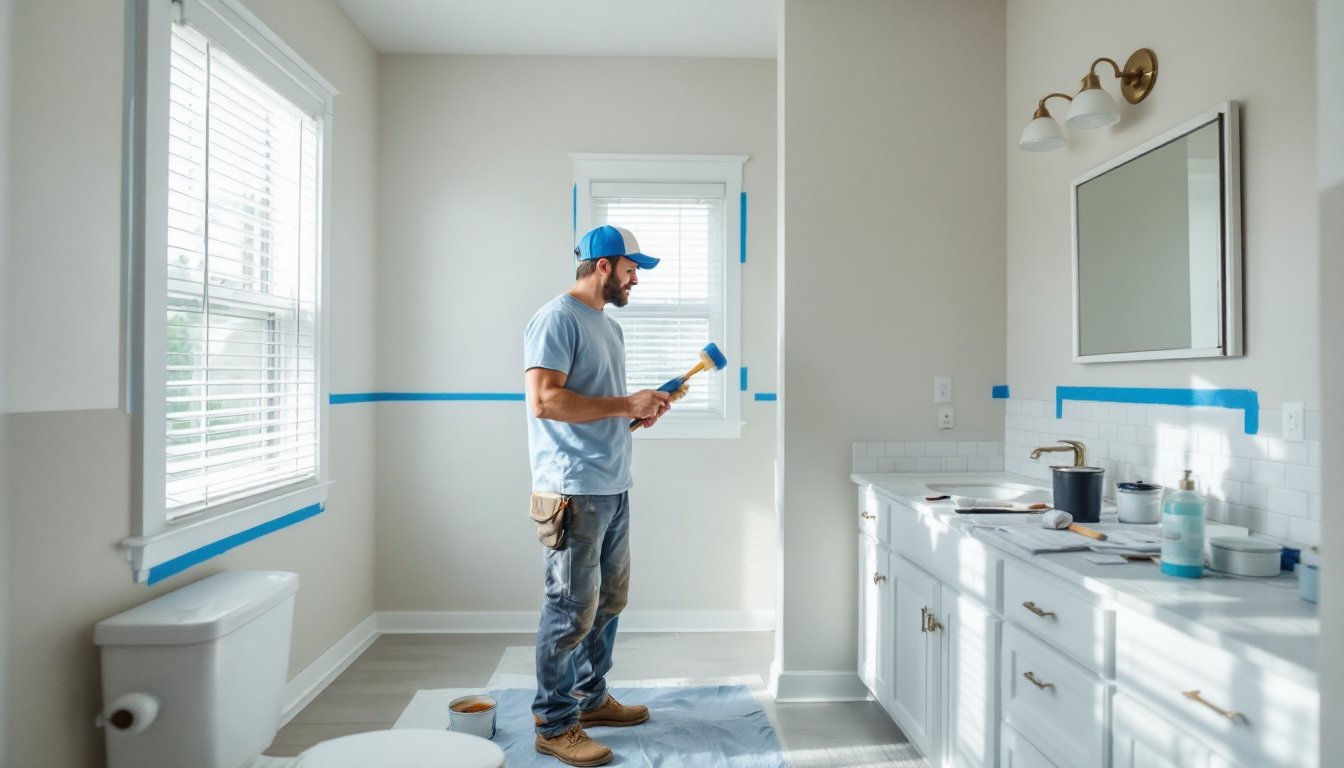
A coat of quality bathroom paint (semi-gloss or satin finish to resist humidity) costs $30–60 per gallon and typically covers 350–400 square feet. A 5-by-8-foot bathroom needs roughly one gallon. Prep is everything: fill holes, sand glossy surfaces, prime any new drywall patches, and tape trim cleanly. Poor prep shows immediately. Avoid matte finish in bathrooms, moisture will streak it.
Hardware replacements take 10 minutes and cost $20–60 per fixture (cabinet handles, towel bars, toilet paper holder, towel ring). Mismatched or dated hardware reads as careless: cohesive, modern knobs and bars elevate everything instantly. Stick to brushed nickel, matte black, or polished chrome, trendy finishes date fast.
Lighting makes or breaks a bathroom. A basic vanity light strip above the mirror ($40–120) with LED bulbs beats outdated dome fixtures. If your bathroom fan is noisy or doesn’t pull moisture, a quiet, efficient replacement ($80–150) is a solid investment that prevents mold and extends wall life. Both are within DIY reach if you’re comfortable with basic electrical wiring and shutoff breakers. Always turn off power at the breaker, test with a non-contact voltage detector, and follow NEC guidelines for bathroom receptacles and moisture barriers.
Tile and Backsplash Options
Full tile floor replacement is labor-heavy and costs $500–1,000+ for materials and pro installation. But a small accent wall or backsplash behind the vanity ($100–250 in tile, $200–400 in labor if you hire) gives major impact. Subway tile, porcelain mosaic sheets, or peel-and-stick backsplash tiles are budget-friendly alternatives if you’re willing to do the cutting and grouting.
If your existing floor is sound (not cracked, not settling), leave it. A fresh grout clean or reseal ($50–100 DIY, $150–250 pro) refreshes without replacement. If you must replace flooring, porcelain or ceramic tile (rather than natural stone) keeps costs down. Budget $4–8 per square foot for material plus installation labor. Vinyl plank flooring ($2–5 per sq ft installed) is softer underfoot and faster to lay but shows scratches faster in a high-traffic bathroom.
DIY vs. Hiring Help: Where to Save and Splurge
Demolition and prep are tedious but low-skill. Ripping out old vanity, mirror, and fixtures, patching drywall holes, and hauling debris are perfect DIY tasks. Wear a dust mask and safety goggles, old tile can harbor asbestos in homes built before 1980, and drywall dust irritates lungs. If you suspect asbestos, have a sample tested or hire an abatement pro.
Painting, caulking, and hardware swaps are absolute DIY wins. You need a brush, roller, painter’s tape, and patience. Install vanity mirrors and shelves yourself with a level and drill. Both save hundreds.
Plumbing and electrical work varies by code and complexity. Replacing a faucet or toilet is manageable if you follow instructions step-by-step and test for leaks. Rewiring a vanity light or fan is doable if you’re confident with a multimeter and breaker panel. But if you’re uncertain, hire a licensed plumber or electrician for $150–250 per hour. A mistake here costs far more than prevention.
Tile installation, especially floors, demands precision and experience. Grout lines must be level, cuts must be clean, and thinset application must be consistent. If you’ve never tiled, practice on a small backsplash or hire someone. Lessons from platforms like Young House Love show plenty of DIY successes, but also plenty of “we learned the hard way” stories.
Ventilation and structural work, rotten subfloor, reframing, moving plumbing, always hire pros. These affect safety and home value.
Smart Shopping and Material Selection Tips
Timing and source matter. Buy paint, hardware, and fixtures in off-season (winter for tile, summer for paint sales). Floor and tile closeouts, discontinued colors, and overstock from builders often sell for 30–50% off big-box and specialty tile suppliers.
Homeowner resources like ImproveNet help you compare contractor bids and access bulk discounts through partner suppliers. For vanities, faucets, and mirrors, browse Facebook Marketplace, estate sales, and architectural salvage yards. A vintage cast-iron pedestal sink with good bones ($30–80 used) paired with a modern faucet ($60–150) beats a flimsy new vanity.
Material acclimation matters more than homeowners think. If you buy tile or wood, let it sit in your bathroom for 48 hours before installation, temperature and humidity swings cause expansion and contraction. Failing to acclimate is why grout cracks and boards warp.
Buy paint primer separately from paint. A $12 primer costs far less than recoating with expensive paint because the first coat didn’t bond. Use painter’s tape (blue, removable) on trim, and invest in a good brush and roller: cheap tools shed bristles and lint into your finish.
For flooring, vinyl plank is forgiving to install and budget-friendly ($2–5 per sq ft), but ceramic or porcelain tile ($4–8 per sq ft) is more durable and easier to keep clean in a humid bathroom. Choose slip-resistant ratings (ADA standards recommend a coefficient of friction of at least 0.60).
Check return policies. If you buy $800 in materials upfront and run into framing issues, you want the flexibility to exchange or return unused stock. Big-box retailers offer 30–90 day returns: mom-and-pop suppliers may not. Factor this into where you shop.
A proven approach: Addicted 2 Decorating for budget makeover inspiration and real examples of what’s possible in tight budgets. These sites chronicle material choices, costs, and outcomes transparently.
Conclusion
An inexpensive bathroom remodel succeeds on priorities, not shortcuts. Paint, hardware, lighting, and smart cosmetic upgrades deliver maximum visual impact for minimal spend. Tackle demo, prep, and simple installations yourself. Call licensed professionals for plumbing, electrical, and structural work. Hunt for deals, let materials acclimate, and prep surfaces properly. Under $2,000 is achievable, the catch is honesty about what you can safely and competently do, and permission to hire help where it counts.